

As I was working through my own “things I really should get organised” list today, I found myself reflecting on what I’d already done, what was still left to do, and how easy it is to keep putting some of these important tasks aside.
One item that kept coming back to me was my important paperwork.
Not because it isn’t safe—but because I started asking myself a different question:
If something happened to me tomorrow, would the people I love know where to find everything they need?
It’s a simple thought, but one that can make an enormous difference during an already difficult time.
That reflection inspired me to write this blog. If you’ve been meaning to get organised—or simply want the peace of mind that comes from knowing your family won’t be left searching—I hope these practical ideas help you get started.
How should I keep my important papers safe, but visible?
This is one of the most practical questions you can ask yourself, especially from an end-of-life planning perspective.
The goal isn’t just to keep documents safe—it’s to ensure the right people can find them quickly if you’re unable to tell them where they are.
Below are approaches that balances security with accessibility:
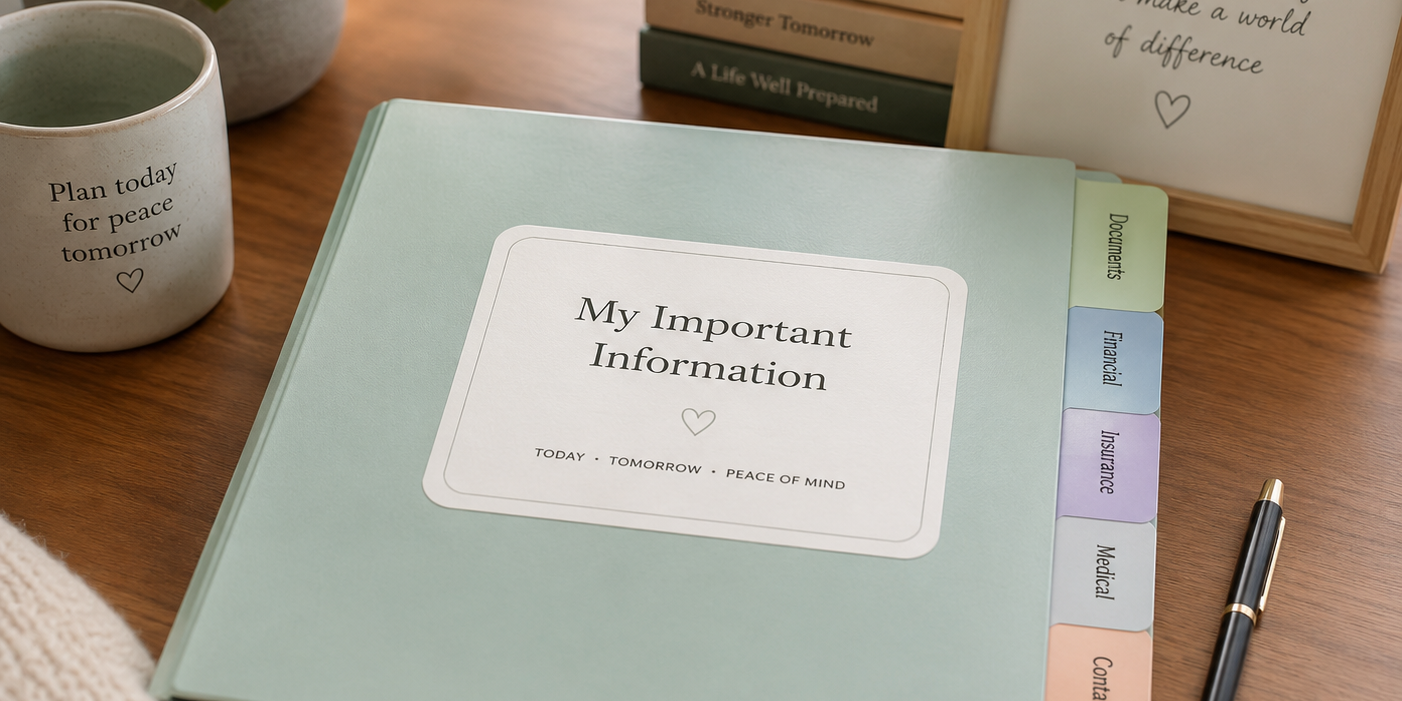
Option 1: A Clearly Labelled “Life Folder” (Recommended)
Keep a brightly coloured folder or binder in a secure but obvious location (such as a filing cabinet or home office drawer) labelled something like:
- My Important Information
- If Something Happens to Me
- Family Information Folder
- Peace of Mind Folder
Tell your trusted person exactly where it is.
Include copies or originals (where appropriate) of:
- Will (or note where the original is held)
- Enduring Power of Attorney
- Enduring Guardianship/Medical documents
- Advance Care Directive
- Funeral wishes
- Birth and marriage certificates
- Passport details
- Insurance policies
- Superannuation information
- Property information
- Vehicle details
- Bank list (not necessarily account balances)
- Contact list
- Subscription list
- Pet care instructions
- Digital accounts and instructions
Option 2: Fireproof Document Safe
A small fireproof and waterproof safe is excellent for:
- Original Will
- Birth certificates
- Passports
- Property deeds
- Irreplaceable documents
However: don’t let it become a mystery.
Keep:
- the key or combination accessible to your trusted executor or attorney, or
- written instructions explaining how to access it.
Option 3: Digital Backup
Scan important documents and store them:
- in encrypted cloud storage
- on an encrypted USB drive
- or in a password manager that supports secure document storage.
Let your executor know:
- where they are
- how they’ll gain access if needed.
Option 4: “Grab and Go” Folder
For emergencies (hospital admission, evacuation, etc.), have a folder containing:
- medication list
- Medicare details
- emergency contacts
- medical history
- Advance Care Directive
- specialist details
What NOT to do
Avoid:
- hiding documents under mattresses or inside books
- keeping everything in multiple secret places
- storing everything only on your computer
- locking everything away without telling anyone where it is
A perfectly secure document that nobody can find isn’t very helpful when it’s needed.
My favourite approach
I often suggest people use a two-tier system:
Fireproof Safe
- Original legal documents
- Passports
- Birth certificates
Peace of Mind Folder
- Copies of important documents
- Instructions on where originals are kept
- Contact information
- Funeral wishes
- Medical information
- Financial summary
- Digital asset guide
- “What to do first” checklist
This means family can immediately begin helping without having to search through the house.
One additional tip that many people overlook: review the folder every 6–12 months. A document that’s easy to find but out of date can be almost as frustrating as one that’s missing.
This topic is actually one of the key discussions I encourage in my Peace of Mind Conversations. Being organised isn’t about expecting the worst—it’s about giving yourself and the people you love clarity, confidence, and one less burden during an already difficult time.